
JP
EN
MENU

Interview

At the Intersection of Fundamental Research and Application
An Ideal Environment for Tackling Challenges in Building an Inclusive AI Society

Principal Researcher,
Research & Development Group

Ikuro Sato,
Ph.D.

Researcher,
Research & Development Group

Shinya Gongyo,
Ph.D.

Fundamental Themes Shared Across Deep Learning Applications

Advancing neural network efficiency and building AI reliability.

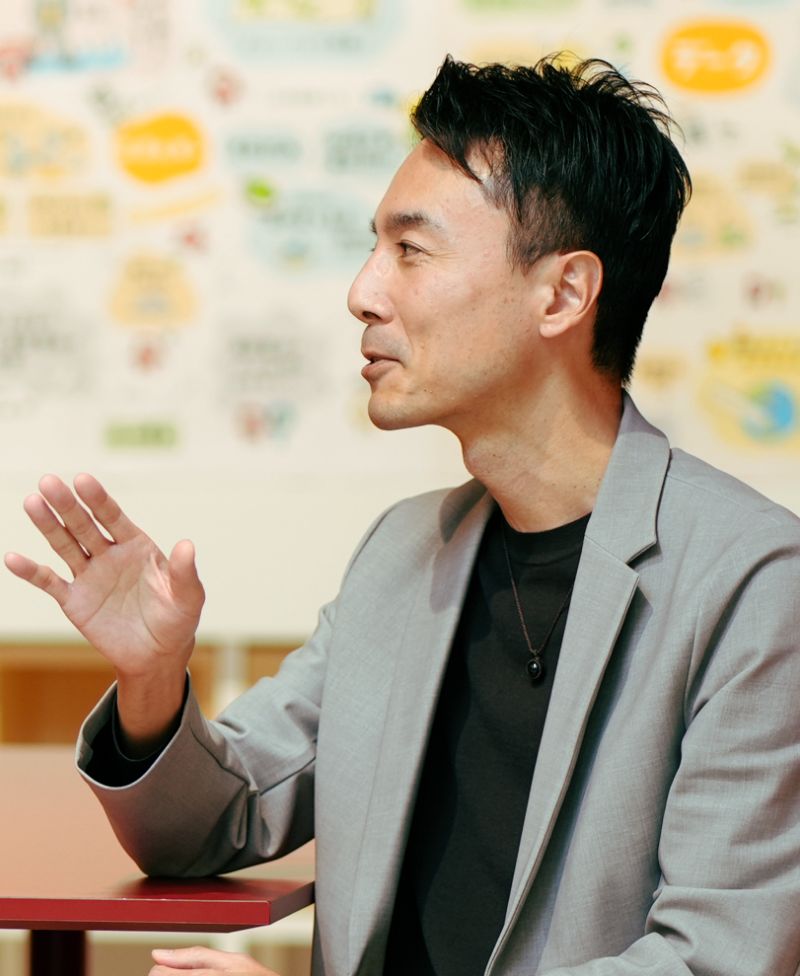
Sato

Deep learning first gained widespread attention with the groundbreaking results presented by Geoffrey Hinton’s group at the 2012 ImageNet Large Scale Visual Recognition Challenge (ILSVRC). I was deeply impressed by this work, which motivated me to begin my own research in deep learning. Since then, as many people know, the field has advanced rapidly. At ITLAB as well, deep learning is now used across a wide range of research areas, including autonomous driving, visual inspection in manufacturing, and natural language understanding.

Within this broad landscape, our research cluster tends to focus more on themes related to autonomous driving. At the same time, however, we work on issues that are not limited to autonomous driving alone, but are relevant to all domains that use deep learning. In that sense, our work is closer to fundamental research that underpins a wide variety of applications.
Gongyo

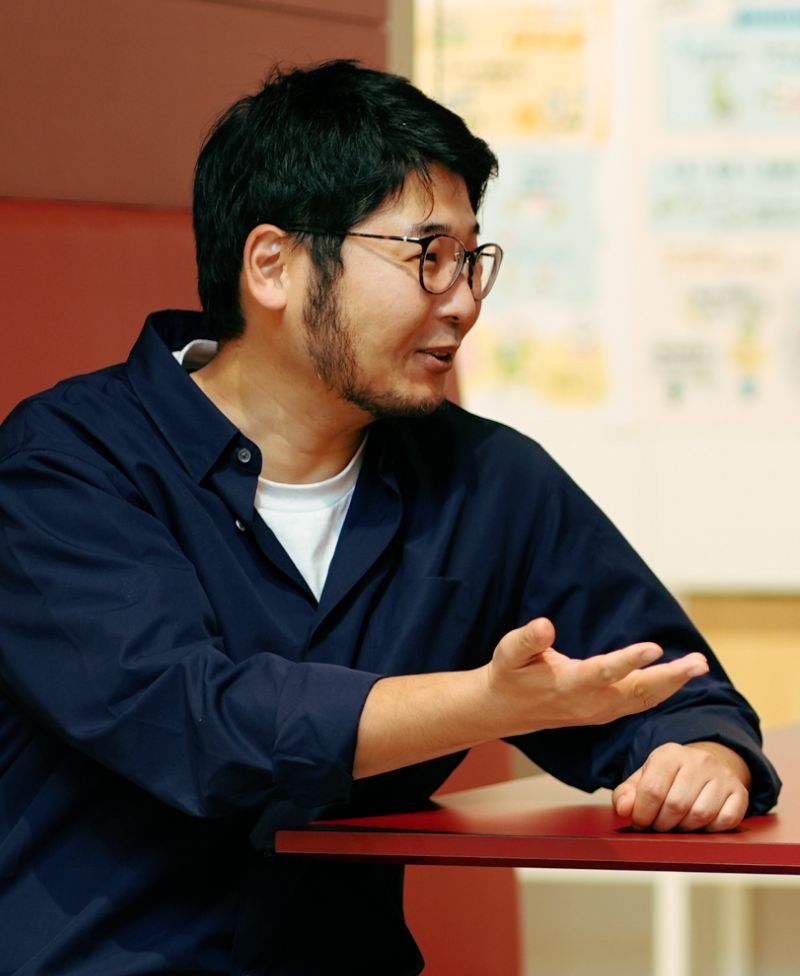
My primary research theme is reducing the computational load of neural networks. In autonomous driving, there is active research into end-to-end AI models that not only recognize the external environment using multiple onboard cameras, but also directly control steering, braking, and acceleration based on that perception. A major challenge in such models is achieving both high accuracy and low computational load. Models that take inputs from many cameras inevitably require large amounts of memory and computation. However, to realize the real-time control demanded by autonomous driving, these requirements must be reduced without sacrificing accuracy.

In particular, I focus on approaches known as low-bit quantization, which fall under the broader category of neural network compression. These methods use lower-precision integer arithmetic for matrix operations instead of floating-point arithmetic, dramatically reducing memory usage and computational load. Of course, naively reducing precision or bit width can degrade accuracy. To address this, the model is retrained after quantization to recover performance. Retraining low-bit models can be viewed as tackling a high-dimensional discrete optimization problem, making it an extremely interesting topic not only from an applied perspective, but also as fundamental research.

Sato

From a different perspective, one of the themes I have been steadily pursuing is AI reliability. Autonomous driving systems are entrusted with human lives, and unlike entertainment applications, they demand a very high level of accountability. In general, it is difficult to achieve 100% test accuracy with AI models, and as a result, it is not easy to completely eliminate failures in real-world deployment. Establishing fail-safe mechanisms, fault analysis, and countermeasures for such systems is essential not only for improving quality, but also for gaining social acceptance. I believe that simply claiming “this AI model has high performance” is insufficient for safety-critical real-world deployment.

The Importance of Developing Proprietary Technologies for Global Adoption

A long-term research environment that gives researchers the freedom to turn fundamental ideas into proprietary breakthroughs.

Gongyo

Both Sato-san and I originally came from backgrounds in theoretical and computational physics. In my previous position, I worked on quantum mechanics and quantum computing. With the rise of deep learning and neural network research, I became interested after hearing that there was growing demand for researchers with strong foundations in theoretical physics. Looking at global trends, research related to neural networks was awarded in the Nobel Prize in Physics in 2024, followed by quantum computing related work in 2025. These developments give me a strong sense that the gap between fundamental research and cutting-edge technology is rapidly shrinking.

My research on low-bit quantization also lies close to the boundary between fundamental research and industry. If low-bit approaches can be pushed to the extreme and achieve binary neural networks, they may even connect with quantum computing research, potentially opening up new points of contact between basic science and industrial applications.

Reducing computational load while maintaining accuracy also leads to lower power consumption, enabling high-performance AI to be deployed on edge devices. That could mean ultra-capable AI in automotive systems, translation AI in hearing aids with only a few milliwatts of power budget, and lightweight, low-heat AI spreading across IoT devices, enabling a new level of distributed intelligence with real impact on society.

Sato

The neural network compression and acceleration that Gongyo-san is working on are application-agnostic. If we can achieve a major breakthrough and protect it with key patents, these technologies will be adopted in products worldwide.

The future I most want to avoid is one in which someone else invents these technologies first, and we end up paying royalties to use them. To prevent that, it is essential to develop proprietary technologies with the goal of global adoption. This is precisely why DENSO’s investment in ITLAB is so meaningful, and because this value is well understood, we are able to pursue our research with a high degree of freedom.

A Culture of Constant Discussion Fuels New Research

At ITLAB, people and ideas flow freely across boundaries, shaping the research we will need next.

Gongyo

After earning my Ph.D., I spent years as a postdoc at universities in Japan and abroad, as well as at a national research institute. I was immersed in academic environments where I was constantly thinking about research and always exchanging ideas. What I appreciated after joining ITLAB was that this environment did not change much. ITLAB brings together researchers with diverse expertise who genuinely enjoy discussion. We can discuss everything from rough early ideas to concrete implementation challenges. We talk on Slack, and whiteboards are everywhere in the office, always covered with quick sketches and notes. That environment helps me stay motivated.

Sato

Gongyo-san’s work on neural network compression and my research on AI reliability are both big and fundamental challenges we face in coexisting with AI. Building on this, one direction I now consider particularly important is improving data coverage. OpenAI pushed the limits of language models by collecting and learning from vast amounts of human-generated text, and LLMs gained remarkably strong language ability. I expect computer vision will move in a similar direction sooner or later. If we apply that idea to autonomous driving, one simple way to think about it is that performance might approach its ceiling if we could learn from every road condition around the world. The challenge, then, is how to build mechanisms that allow AI itself to gather the data it does not yet know. Humans do not randomly store everything they see, but when we encounter something novel, emotional circuits centered around the hippocampus activate and help form short-term memories. In the same way, we need technologies that allow AI to select useful data and continuously expand coverage.

Research life can easily become a repetitive cycle of reading papers and writing code. Yet the motivation and the earliest ideas often come from casual discussions between people. Through efforts such as the collaborative research chair, I hope to make ITLAB a place where people and ideas can flow freely, and where outstanding talent can cross the boundaries between universities, research institutes, and business groups to exchange ideas openly and learn from one another

Join Our Research at DENSO ITLAB

Where engineering curiosity
meets real-world impact

Careers