JP
EN
MENU

Interview

Research “Clusters” that Empower Researchers
to Shape Their Own Research Directions

Senior Researcher,
Research & Development Group

Kohta Ishikawa

One particularly distinctive feature of research activities at ITLAB is the concept of the research “cluster”, which serves as the basic unit of the research organization. How does research progress when it is structured around clusters? We spoke with Kohta Ishikawa to learn more.

Research Units Anyone Can Freely Launch

A flexible, bottom-up research structure built on shared vision and accountability

At ITLAB, most employees are researchers, and we operate as a teal organization with a flat structure. Unlike conventional corporate hierarchies, we don’t have rigid management layers. The organization consists only of a broad Research & Development Group, without subdividing into narrowly defined departments.

Instead, each researcher participates in research clusters, where we engage in a wide range of research activities. Anyone can establish a research cluster at any time, and you can belong to multiple clusters simultaneously. I myself am currently involved in three clusters.

To launch a cluster, you prepare a concise one-page proposal called a “cluster vision”. This is presented internally and requires approval. The vision includes three key elements: the business challenge, the research scope and objectives, and the technical approach. In essence, you need to clearly articulate who will benefit from the research and to what extent. So it’s not simply a matter of pursuing whatever interests you—the committee must recognize the significance and potential impact.

Clusters may be based on a vision of what should be tackled now to shape the future of the automotive industry, or on addressing urgent challenges. Rather than starting from purely personal curiosity, many clusters emerge from identifying issues across the company or the broader industry and working toward solutions. If the content is sound, approval can be granted very quickly. This sense of speed is something I believe is unique to ITLAB.


Diverse Discussion Styles, Including Spontaneous Ones

Small, autonomous teams enable open, in-depth dialogue

Each research cluster has a lead, members who participate with their own research themes, and collaborating observers. While we have systems in place to visualize progress and research status, how each cluster runs is really up to the lead. Since we have no dedicated managerial positions at ITLAB, each cluster is fully responsible for advancing its own research.

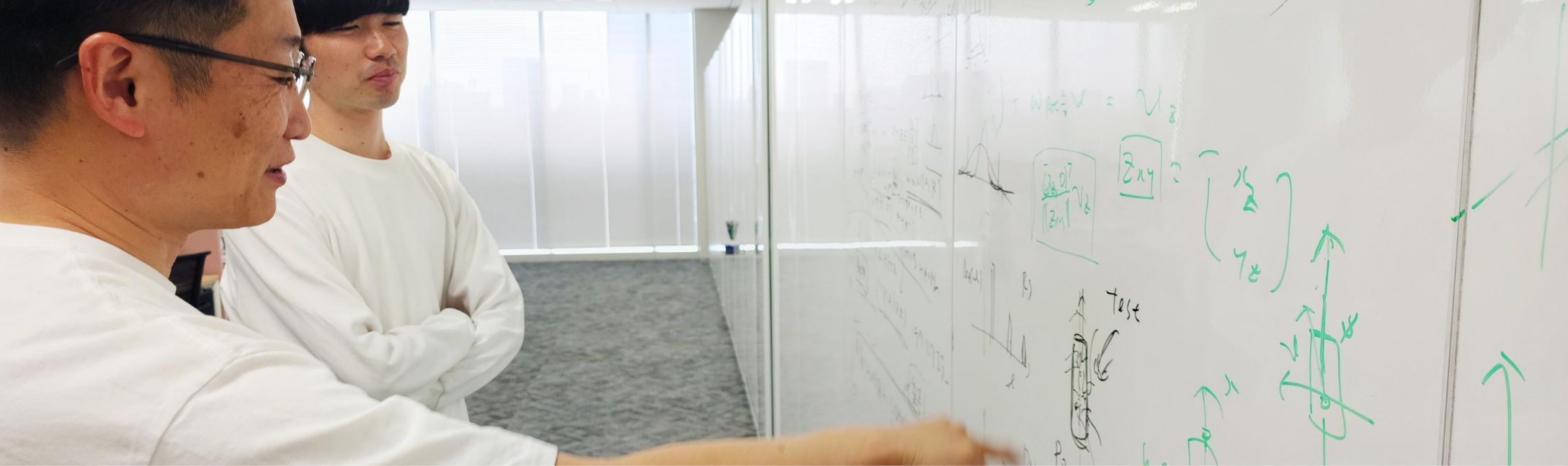
Discussion plays a crucial role in our research, and each cluster has its own style. Some favor scheduled meetings in reserved spaces, while others rely on spontaneous conversations that begin informally. At ITLAB, parts of our walls double as whiteboards, making it easy to begin discussions on the spot. Our clusters are generally small—typically around five people, though some have just two. I think this size is what allows us to have really deep discussions.

The Goal of Research Clusters Is Solving Defined Challenges

Research driven by long-term vision, not short-term trends

Our goal in research clusters is not academic publication, but addressing industrial challenges and translating vision into practice. This is one major way we differ from university research.

Rather than shifting topics to follow short-term research trends, we continue our work toward solving the original problem as long as the underlying challenge remains relevant. Conversely, if changes in society or business conditions render a vision no longer meaningful, we either revise it appropriately or disband the cluster and form a new one. We treat the vision as an absolute guiding principle—that’s how seriously we take it.

Join Our Research at DENSO ITLAB

Where engineering curiosity
meets real-world impact

Careers